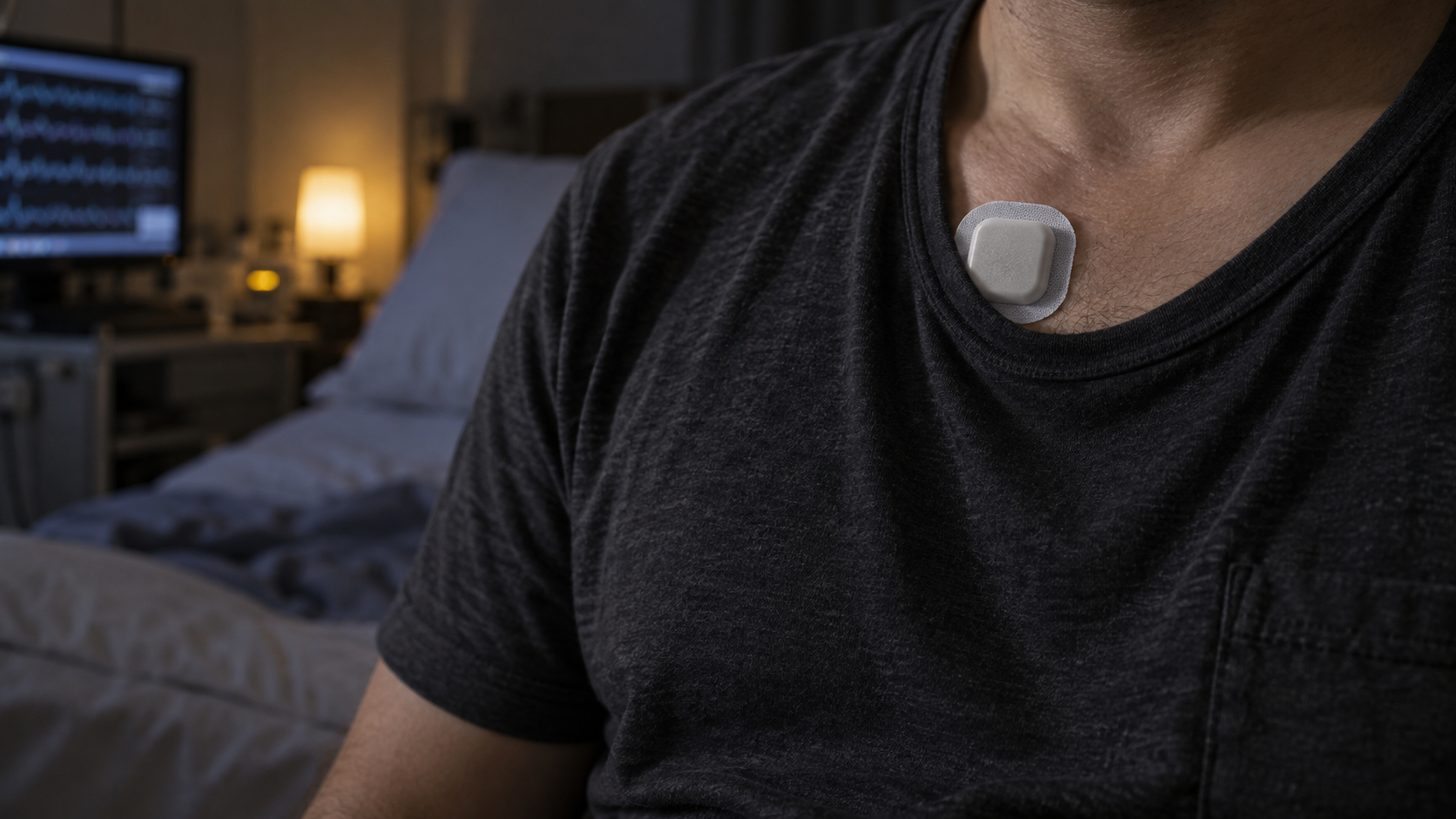
What the patch measures
A research team at the Hong Kong University of Science and Technology developed HELP, a soft sensor that adheres to the skin and records breathing motion alongside cardiac signals. The system is designed to track chest and abdominal movement, heart rate, body position and blood oxygen levels.
In small pilot evaluations, the researchers compared its detection of sleep apnea events with polysomnography (PSG), the overnight test used in hospitals. They reported high agreement between the patch and PSG measurements.
Early applications and limits
The team also explored pilot uses in monitoring response to asthma treatment and overnight oxygen drops in people with chronic obstructive pulmonary disease (COPD). These early tests suggest potential applications but do not establish clinical performance across a broad population.
The study does not show that HELP is a validated diagnostic device or a ready-to-use home test. Larger independent studies would be needed to assess accuracy, reliability and how the patch compares with current diagnostic pathways.
Sources
Study published in Science Advances (2026), DOI 10.1126/sciadv.aee5907, with a Medical Xpress secondary report; developing team identified as Hong Kong University of Science and Technology.
‘High agreement’ with polysomnography is not given as a specific statistic (no percentage or sensitivity/specificity figure); the pilot's exact participant count is not stated in the article.
No independent, larger-scale validation of the patch against polysomnography; no clinical performance data for the asthma/COPD monitoring use cases; response from the contacted institution not yet received.