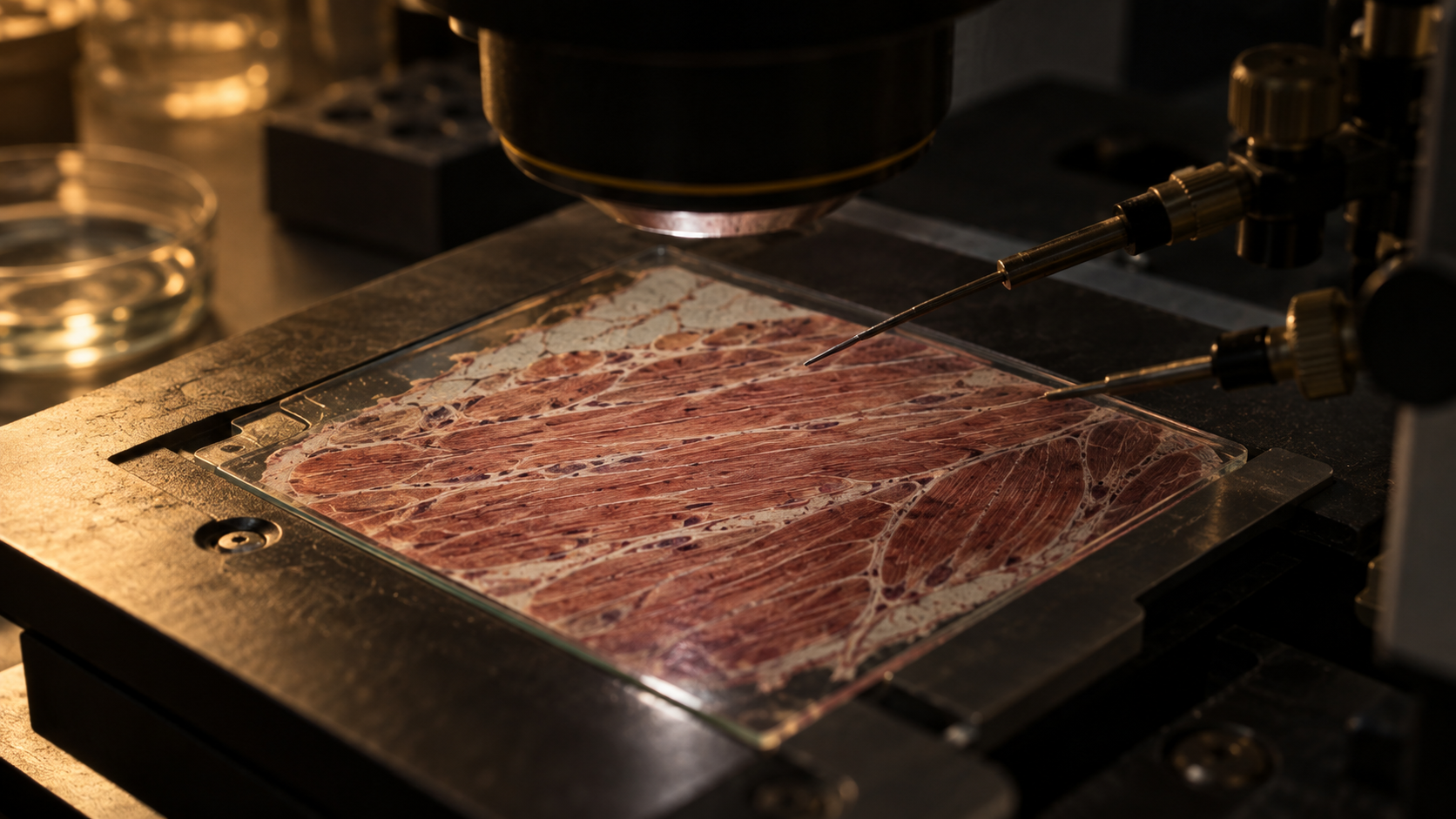
What happens at the neuromuscular junction
A study in the Journal of Clinical Investigation suggests that impaired communication between nerves and muscles may contribute to age-related weakness. Muscle contraction depends on electrical signals traveling from motor nerves to muscle fibers, and the researchers found more frequent transmission failures in older adults with weakness.
The human comparison was small: 10 older people reporting physical limitation were compared with eight younger or middle-aged controls. The researchers reported that measures of transmission impairment were associated with muscle strength. The sample is too limited to represent older adults generally.
What the animal experiments showed
The team observed reduced density of the NaV1.4 sodium channel at the neuromuscular junction in aged human and rodent muscle tissue. In aged rodents, partial inhibition of the ClC-1 chloride channel improved muscle excitability, nerve-to-muscle transmission and contractile performance.
Those intervention results were obtained in animals. The study does not show that ClC-1 inhibitors treat sarcopenia or weakness in older people. Further work would be needed to establish whether the mechanism can be targeted safely and effectively in humans.
Sources
Study published in the Journal of Clinical Investigation (2026), DOI 10.1172/JCI190646; human comparison group sizes (10 weak older adults vs 8 controls) and the ClC-1 rodent finding are stated in the study.
The infographic's ‘250% higher mean jitter’ figure is not spelled out in the article body; the human sample is too small to generalize to older adults broadly.
Whether ClC-1 inhibition is safe or effective in human patients has not been tested; response from the contacted researchers/journal not yet received.