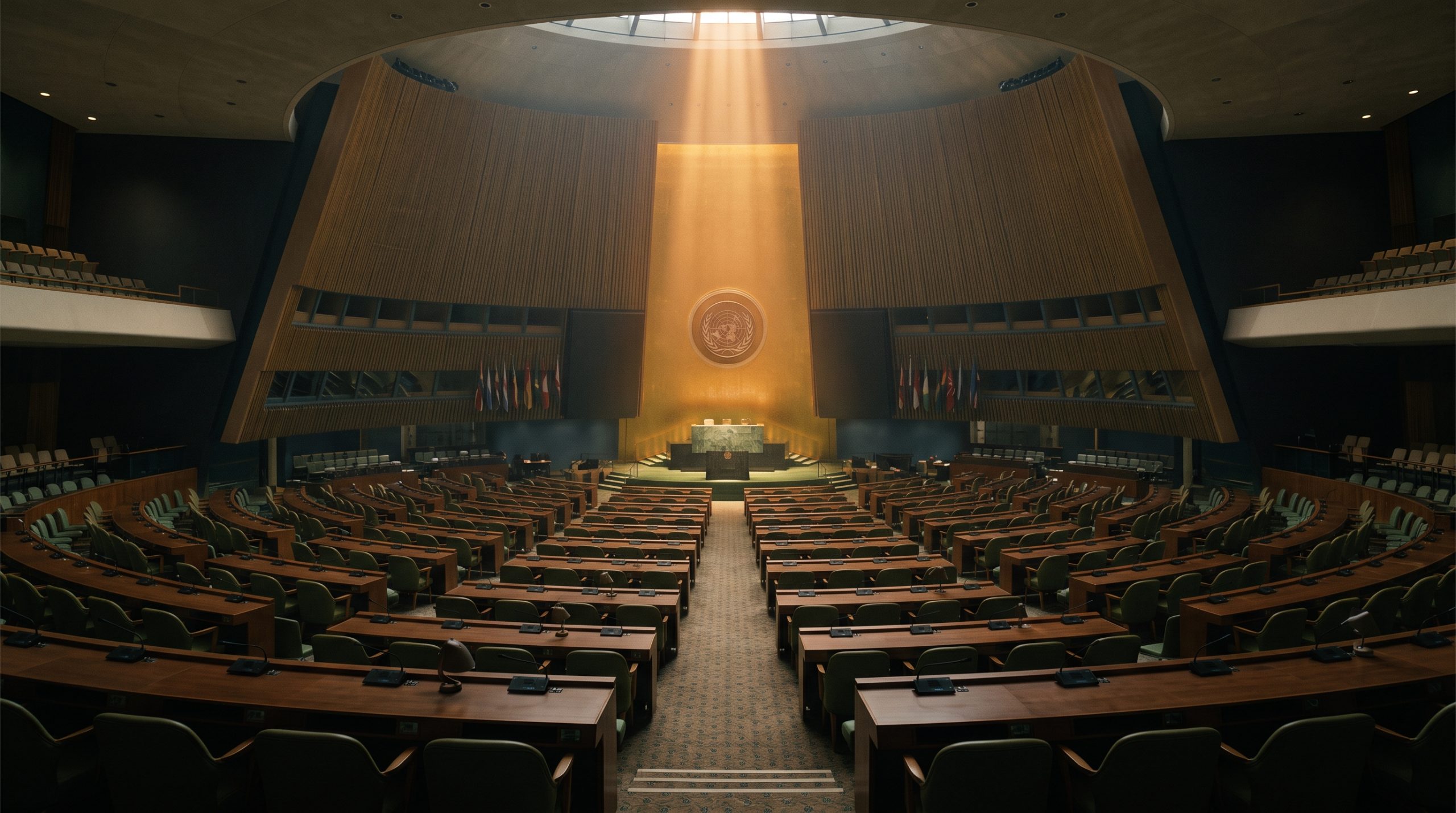
What happened, in two sentences: The UN Environment Programme (UNEP) said in a report published on September 2 that the world will “likely” exceed the Paris Agreement’s 1.5°C warming limit within the next few years. The new goal is to keep that overshoot as small and brief as possible, then remove carbon from the atmosphere to bring temperatures back below 1.5°C by the end of the century. Secretary-General António Guterres made this framework part of the UN’s official language at his final General Assembly and the climate summit he convened for September 23.
Why it matters: Since 2015, climate diplomacy has been built around one line: “do not exceed 1.5°C.” The UN now says that threshold is likely to be crossed. Even in the most optimistic scenario, the report says warming would peak at 1.8°C; under current policies, the year-2100 median is projected at 2.6°C (a range of 1.9°C to 3.6°C). More than 400 gigatonnes of carbon dioxide have been emitted since the Paris Agreement. Keeping the overshoot limited would require emissions to fall 55% from 2019 levels by 2035; every five-year delay adds at least 0.1°C to the peak.
A three-stage plan: first, limit the overshoot by cutting emissions quickly, including methane, to keep the peak as low as possible. Second, manage the peak: temperatures could remain above 1.5°C for several decades, making adaptation and resilience investment essential. Third, bring temperatures back down by going beyond net zero and removing carbon dioxide from the air. The report cautions that carbon removal only works if the peak stays well below 2°C; some losses, including the displacement of communities, may already be irreversible.
UNEP Executive Director Inger Andersen said: “1.5°C is still the target, but we now have to approach it from above.” Scientists disagree on the framing. Andrew Weaver of the University of Victoria said 1.5°C is not a “magic cliff” and that every tenth of a degree avoided means less damage. Stanford’s Rob Jackson was more skeptical: “Overshoot scenarios ask us to stop the train fast and reverse it. Our best hope? Absolutely. Likely? Absolutely not.”
Guterres’s farewell and succession: His second and final term ends on December 31. In his September 22 address, he said “the world’s fault lines are widening,” citing wars, rising temperatures and artificial intelligence, and called for “an interconnected world.” Former Costa Rican vice-president Rebeca Grynspan was ahead in the Security Council’s informal straw poll for his successor; the United States had not endorsed a candidate at the time of publication. Turkey’s connection: Antalya is due to host COP31 in November, where the report’s overshoot framework is expected to feature in discussions.
Verified: UNEP and AP confirm the report date and the 1.8°C peak scenario; the 55% emissions figure and remarks by Andersen and Rogelj are also cited by UNEP/AP. Guterres’s address: France 24 and AP. Summit date: UN News. Grynspan: CNN/Reuters. Uncertainty: The 2.6°C median and 400-gigatonne figures come from a secondary summary (Wins Solutions), not UNEP’s press release. The chart’s “today ~1.3°C above” figure is approximate. Not available at publication: The September 23 summit outcome statement and COP31’s official agenda.