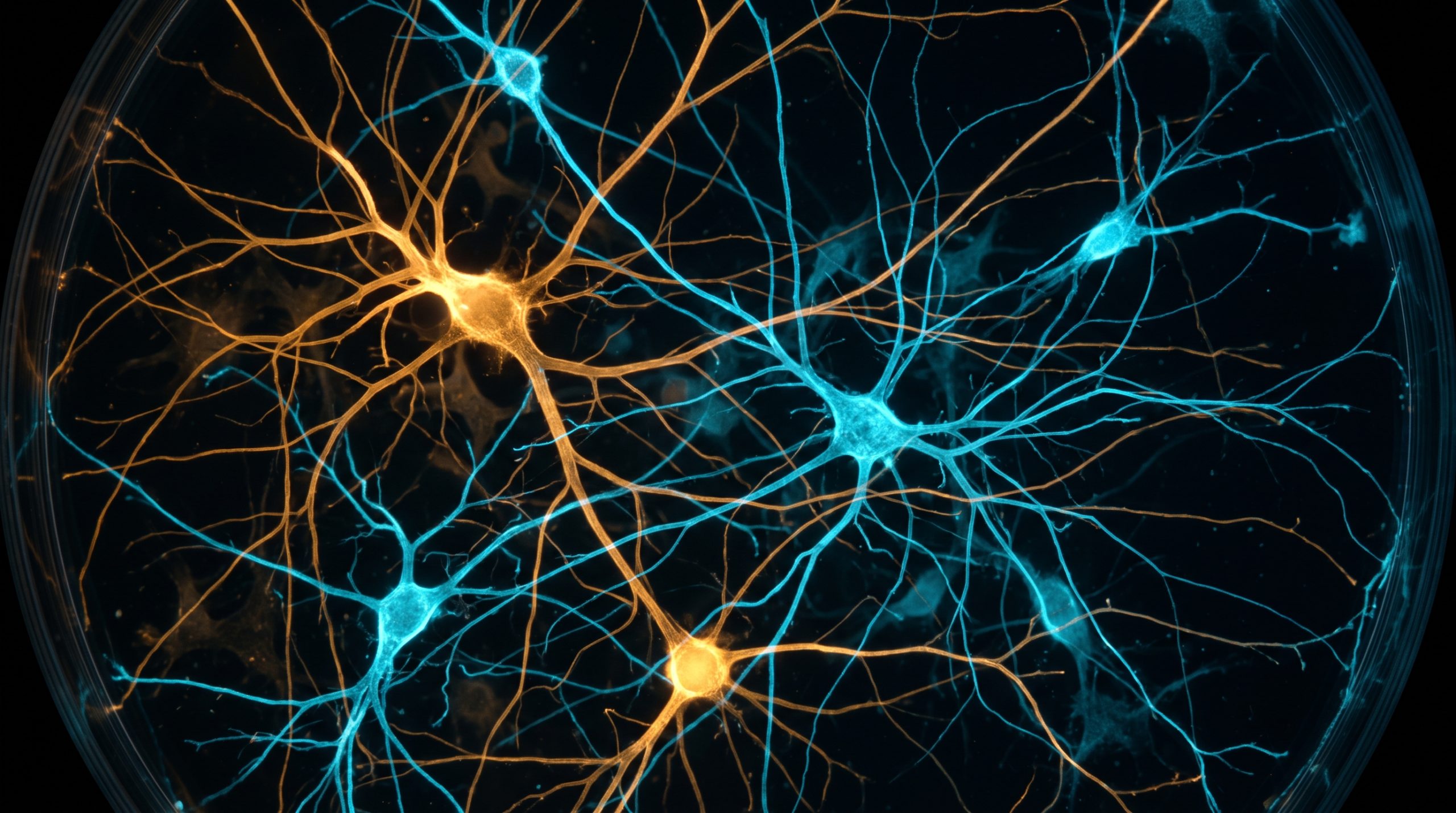
A team led by Kyle Loh at Stanford Medicine challenged the long-standing model that the brain develops from a single type of progenitor cell. In a study published in Nature Neuroscience on September 18, 2026, the researchers report that the forebrain and midbrain arise from one progenitor group, while the hindbrain (the brainstem) develops from a separate group. “We show for the first time that the front of the brain is born from a completely different progenitor than the back,” Loh said.
How the team reached its conclusion. Researchers first tracked mouse embryos during gastrulation, before cells commit to becoming particular organs, and observed two cell groups following separate developmental paths. They then confirmed that the same paths could be reproduced in human pluripotent stem cells using specific signals. Loh said evolution appears to have “taken two existing nervous systems and pushed them together spatially”; the two nerve nets in jellyfish may be a distant parallel.
Why it matters. Researchers have struggled for years to grow human hindbrain neurons in the lab, even as forebrain cells were easier to produce. The new findings point to a reason: previous methods started with the wrong progenitor cells. Using the identified pathway, the team turned human stem cells into functional hindbrain motor neurons. The cells generated normal action potentials and carried markers associated with regions that control facial muscles and swallowing. This could provide a lab model for studying diseases that affect the brainstem, including ALS and spinal muscular atrophy; it is not a treatment.
Limits and next steps. The study examines embryonic development and cell production. “Two organs” is the researchers’ interpretation; the structures work together in the adult brain. The advance offers a research tool, not a treatment for patients. Turning the method into therapies would require years of further research.
Publication date and journal, Loh’s remarks, methods, production of hindbrain neurons, and potential relevance to ALS and SMA: Stanford Medicine, as reported by News-Medical and GEN, plus Neuroscience News, ScienceAlert and WION. The jellyfish comparison is from WION; its wording in the paper was not checked. The “two organs” description is an interpretation used by researchers and media. The full paper was not available for review, and no independent replication was identified.