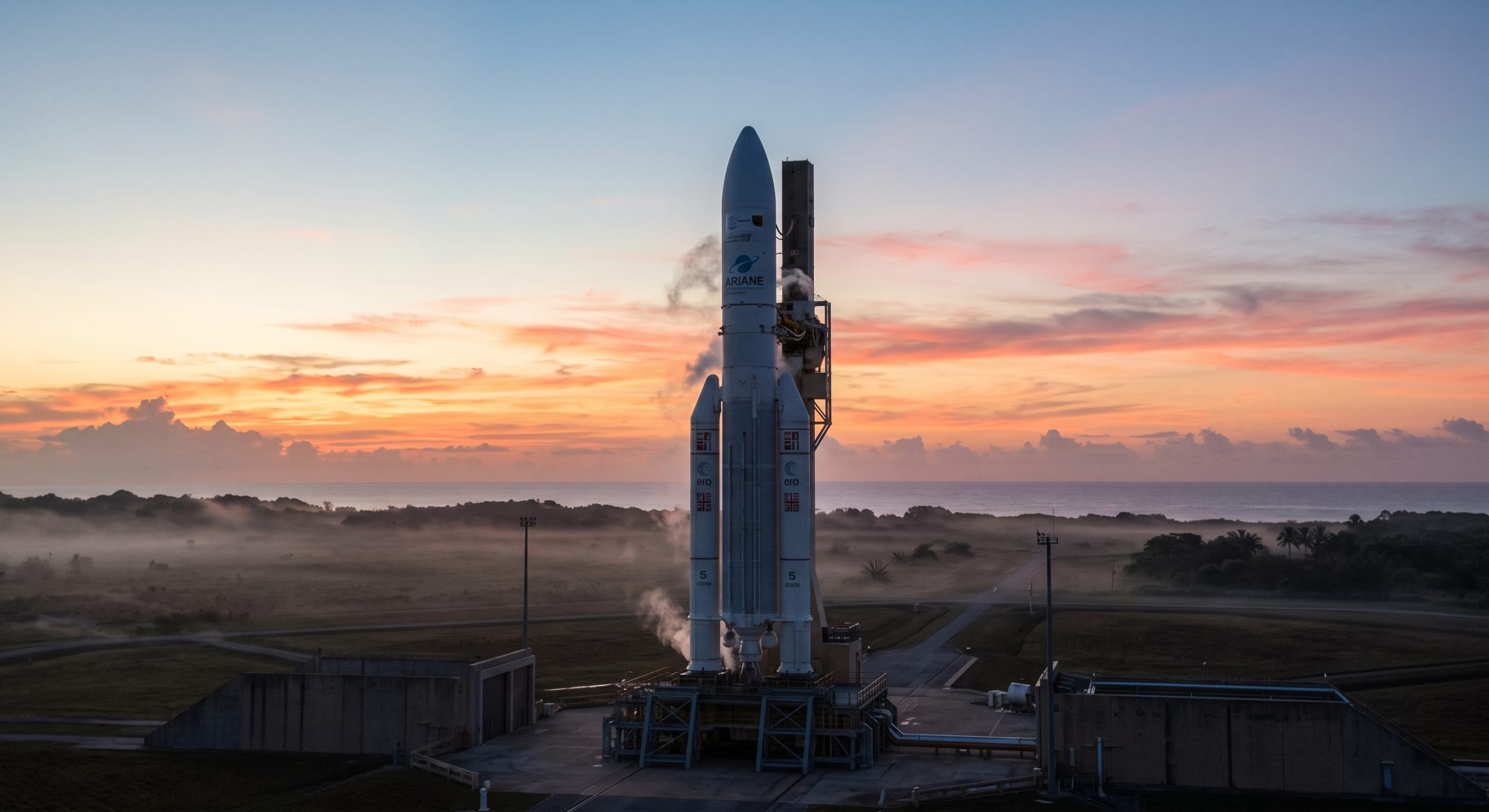
Andrius Kubilius, the European Commission’s commissioner for defence and space, said around 50,000 satellites are expected to be launched worldwide over the next decade, while current launch capacity is not keeping pace with demand. He spoke at the 2nd EU Space Access Conference in Brussels on September 23, 2026.
According to Anadolu Agency, Kubilius said the EU would need 62 launches by 2034 for its Galileo satellite-navigation system, the Copernicus Earth-observation programme and the IRIS² secure communications network. “We have to close this gap. Europe’s space programmes, defence and security depend on it,” he said, arguing that Europe should not remain reliant on foreign rockets.
The Commission’s Directorate-General for Defence Industry and Space said the conference focused on three areas: consolidating institutional launch demand, next-generation launch systems and ground infrastructure. European Space Agency Director-General Josef Aschbacher told Reuters on September 3 that the agency was considering increasing Ariane 6 and Vega-C launch frequency because demand is expected to peak around 2030. Amazon alone has ordered 18 launches.
Europe had to launch satellites on SpaceX rockets for months before Ariane 6’s first flight in July 2024. Türkiye’s Türksat satellites are also launched by SpaceX, making Europe’s capacity gap relevant to Türkiye’s alternatives as well.
Verified: Kubilius’s remarks, the 50,000-satellite and 62-launch figures: Anadolu Agency/Sabah. Conference date and agenda: European Commission official page. Aschbacher’s remarks: Reuters. Uncertainty: Anadolu Agency is the only Turkish-language source for Kubilius’s remarks; the full English transcript was not available. The Türksat–SpaceX reference is general background and was not separately verified for this article. Not available: The Commission has not announced the budget or timeline for closing the launch-capacity gap.